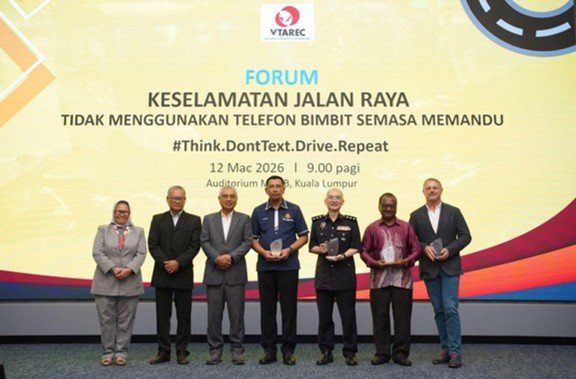
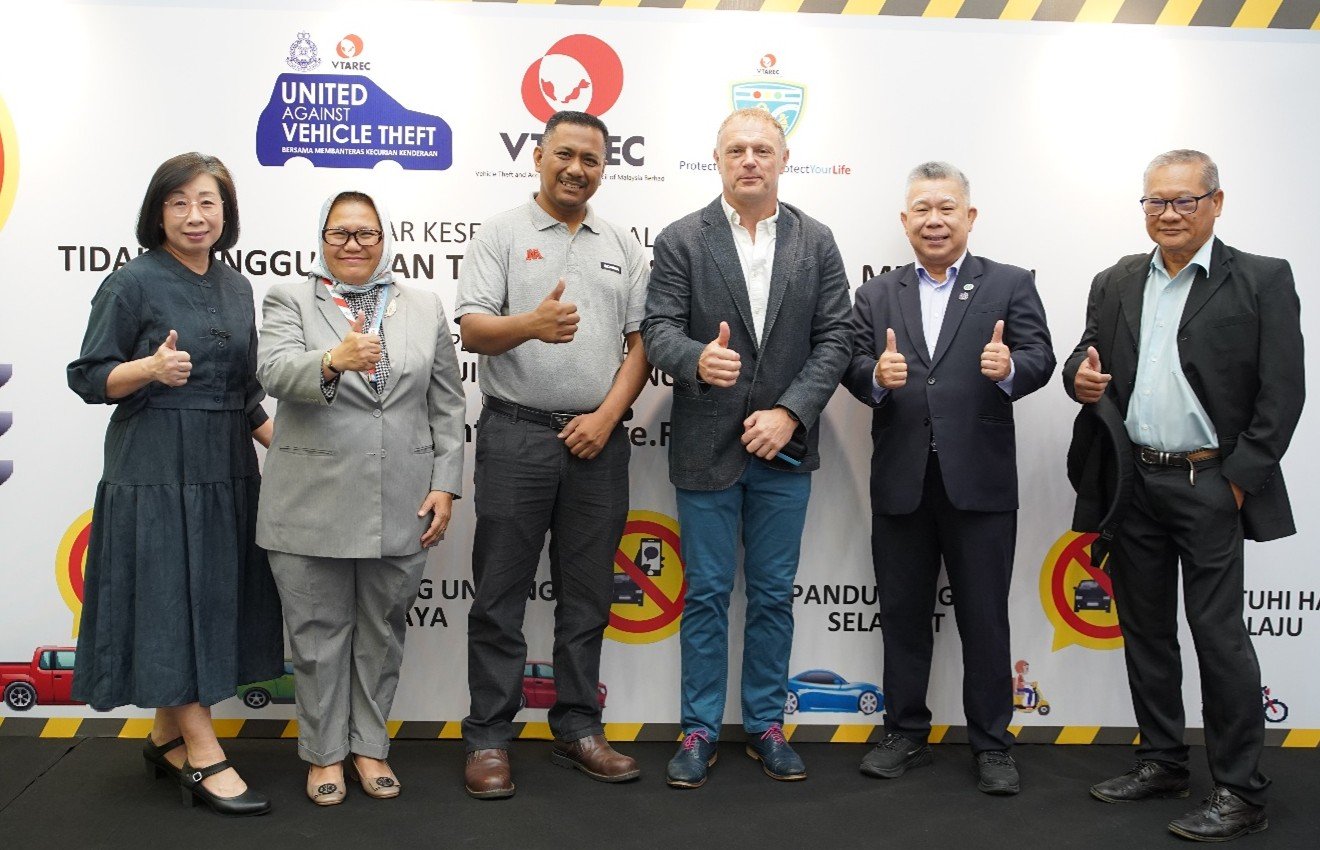
From left: YBrs Puan Mas Tina Abdul Hamid, VTAREC Co-ordinator, YBhg Dato’ Ooi Win Juat, VTAREC Director, YBhg Datuk Lokman Jamaan, VTAREC Chairman, YBrs Tuan Norazman Nordin, Ketua Penolong Pegawai Penguatkuasa Kanan (Dasar) from Jabatan Pengangkutan Jalan Malaysia (JPJ), YDH ACP Tuan Foo Chek Seng, Timbalan Ketua Jabatan Pencegahan Jenayah dan Keselamatan Komuniti (JPJKK) from Ibu Pejabat Kontinjen Kuala Lumpur, YBhg Prof Dr Kulanthayan KC Mani, Faculty of Medicine and Health Sciences from Universiti Putra Malaysia (UPM) and YBrs Mr Steve Miller, Chief Executive Officer of MRC Malaysia.
KUALA LUMPUR, 10 March 2026: The Vehicle Theft and Accident Reduction Council of Malaysia (VTAREC) successfully held a forum titled “Do Not Use a Handphone While Driving” with the hashtag #Think.DontText.Drive.Repeat and a tagline “Driving Requires Brains, Not Phones” at Malaysian Reinsurance Auditorium, Damansara Heights.
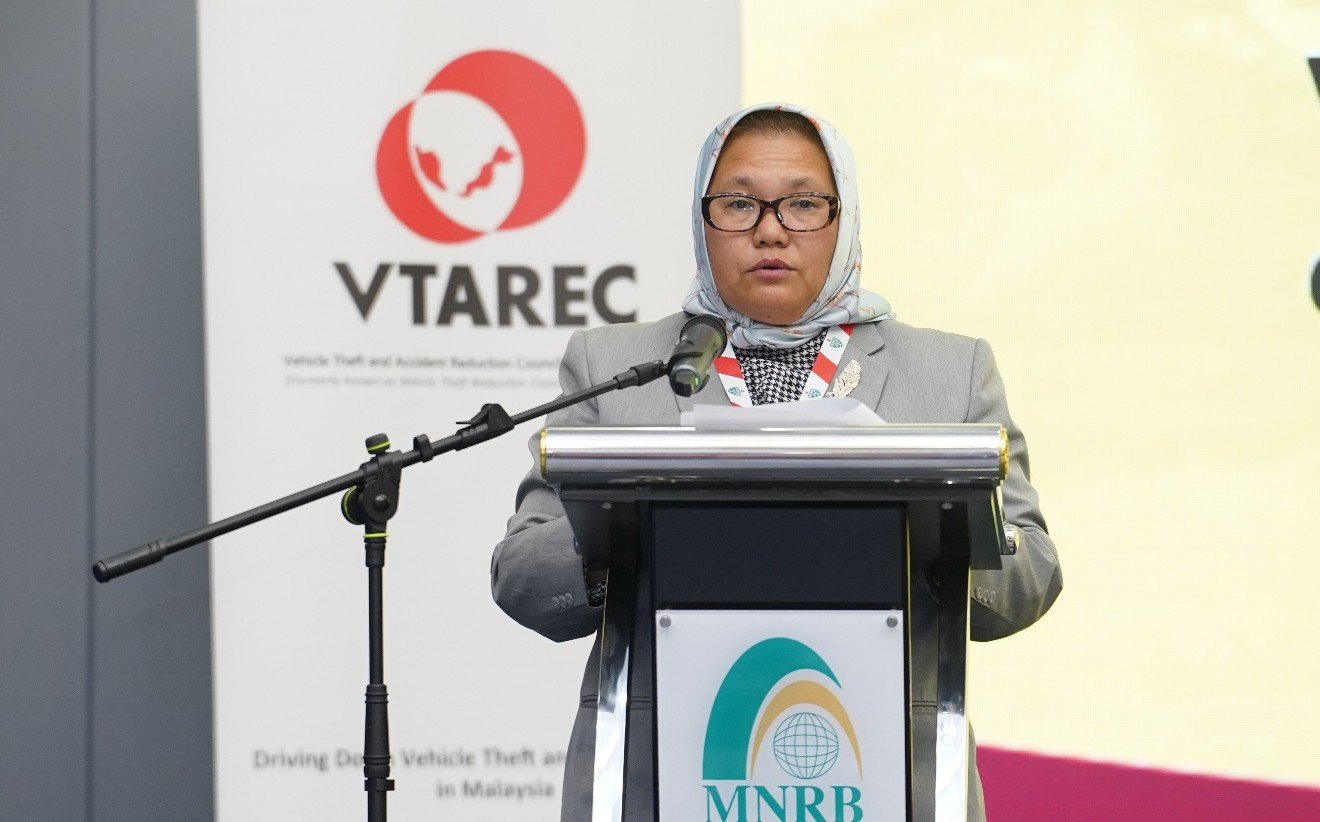 YBrs Puan Mas Tina Abdul Hamid, VTAREC Co-ordinator giving her Welcoming Speech at the VTAREC Road Safety Forum.
YBrs Puan Mas Tina Abdul Hamid, Co-ordinator of VTAREC delivered a welcoming speech. In her welcoming remarks, she highlighted the new VTAREC initiatives, “VTAREC Challenge”, for organisations, universities and companies to participate and drive down road traffic accidents by pledging not to use handphones while driving onto the ‘Pledge Wall’.
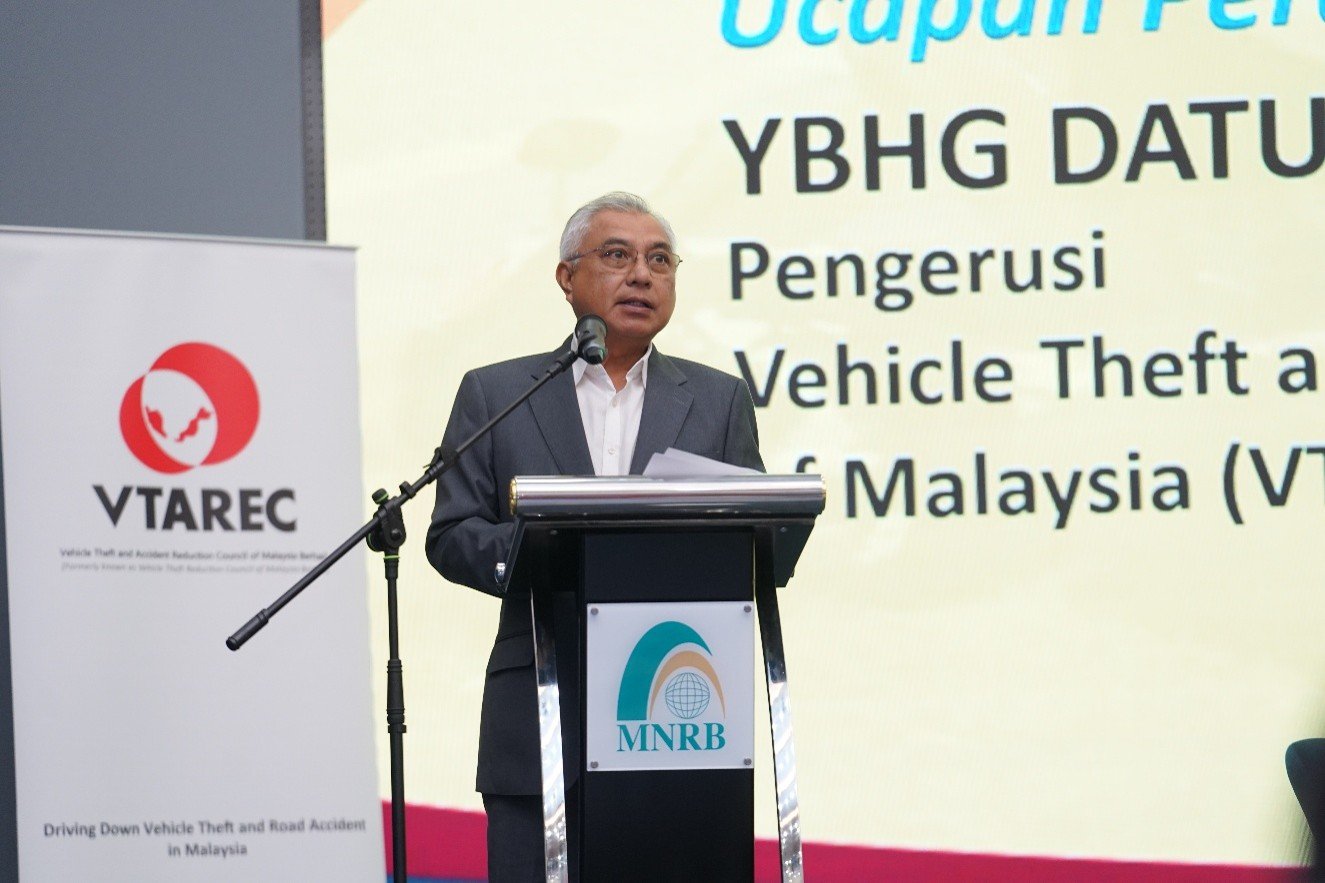 YBhg Datuk Lokman Jamaan, VTAREC Chairman officiating the VTAREC Road Safety Forum.
YBhg Datuk Lokman Jamaan, the Chairman of VTAREC officiated the event by stressing on the danger of using handphones on the road. He also pointed out that the usage of handphones is not just a distraction to the driver, but danger to all road users. He concluded by highlighting the critical need for behavioural change among Malaysian drivers, stressing that technology should not come at the cost of human lives.
The attendees participated in a symbolic “Pledge Wall” activity, signing their commitment to phone-free driving. This was followed by a meaningful montage video that illustrated the real-world consequences of distracted driving.
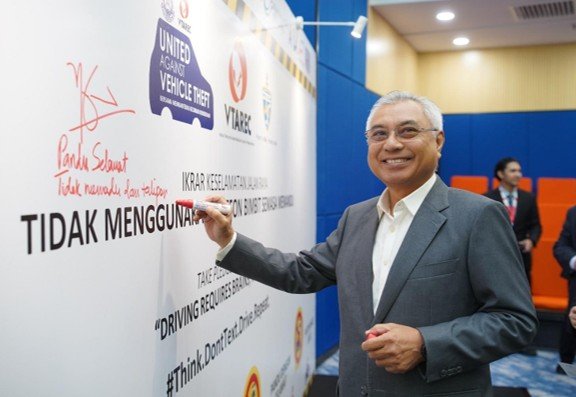 YBhg Datuk Lokman Jamaan, VTAREC Chairman signing the “Pledge Wall” at VTAREC Road Safety Forum.
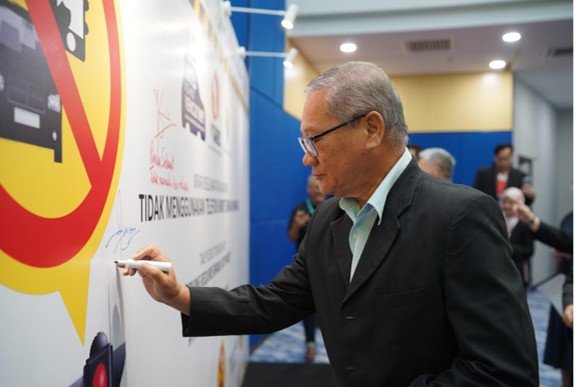 YBhg Dato’ Ooi Win Juat, VTAREC Director signing the “Pledge Wall” at VTAREC Road Safety Forum.
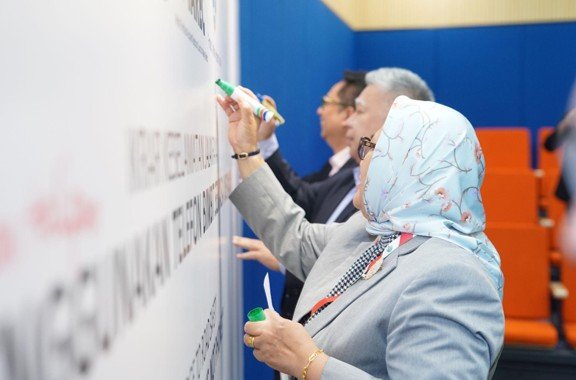 YBrs Puan Mas Tina Abdul Hamid, VTAREC Co-ordinator signing the “Pledge Wall” at VTAREC Road Safety Forum.
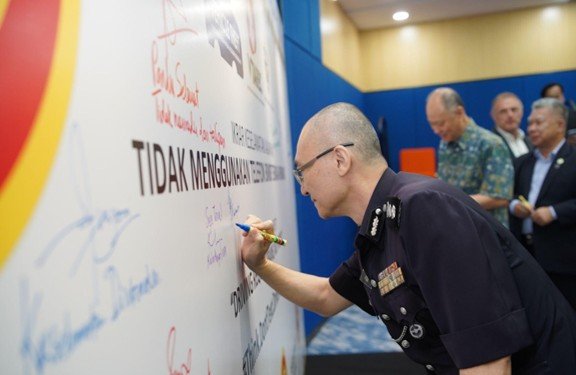 YDH ACP Tuan Foo Chek Seng, Timbalan Ketua Jabatan Pencegahan Jenayah dan Keselamatan Komuniti (JPJKK) from Ibu Pejabat Kontinjen Kuala Lumpur signing the “Pledge Wall” at VTAREC Road Safety Forum.
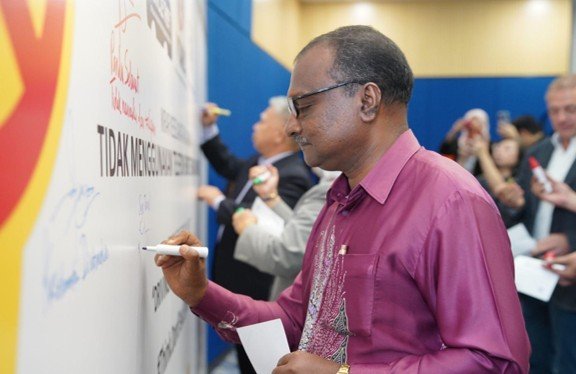 YBhg Prof Dr Kulanthayan KC Mani, Faculty of Medicine and Health Sciences from Universiti Putra Malaysia (UPM) signing the “Pledge Wall” at VTAREC Road Safety Forum.
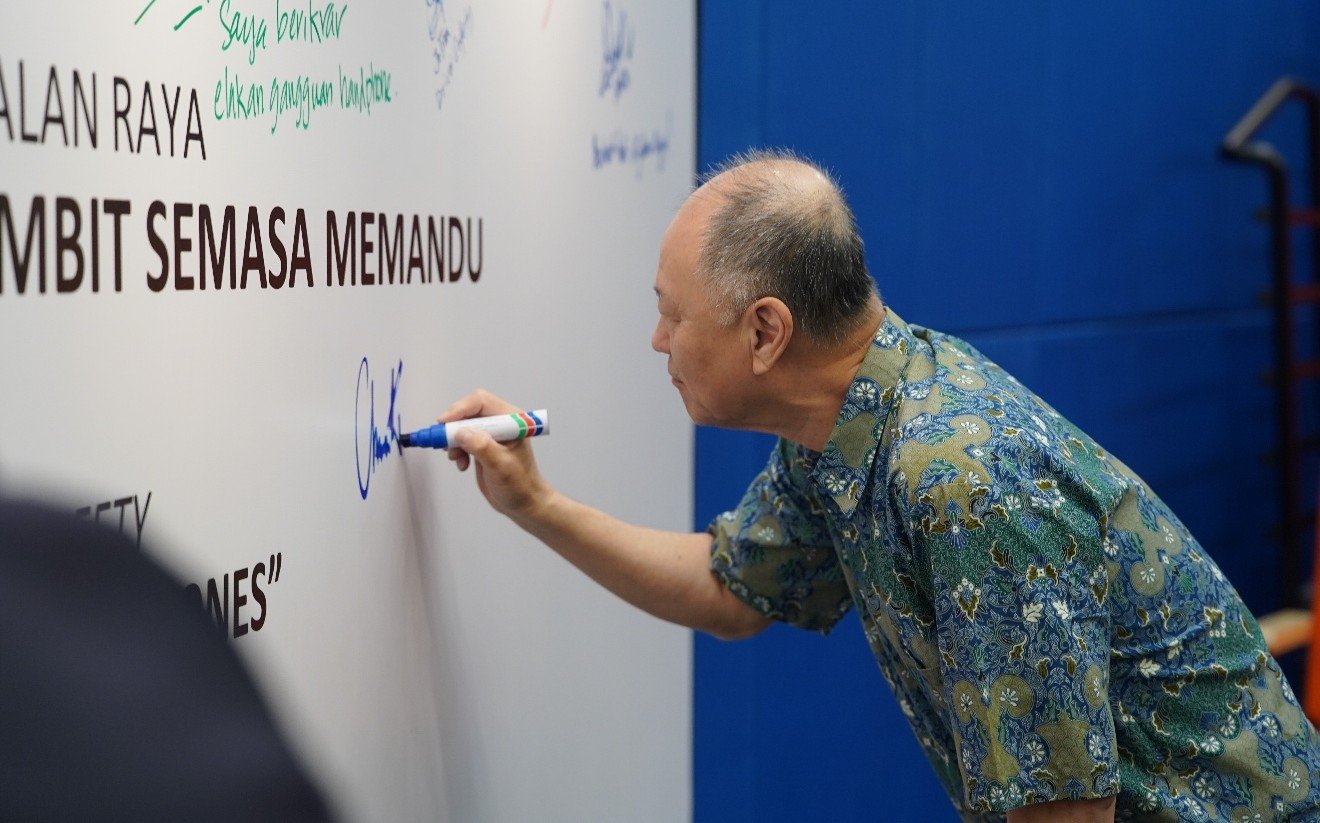 YBrs Mr Chua Kim Soon, Chief Executive Officer of PIAM signing the “Pledge Wall” at VTAREC Road Safety Forum.
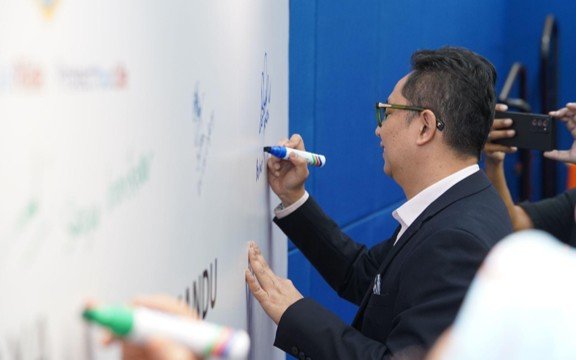 YBrs Ahmad Noor Azhari Abdul Manaf, Chief Executive Officer of Malaysia Re, signing the “Pledge Wall” at VTAREC Road Safety Forum.
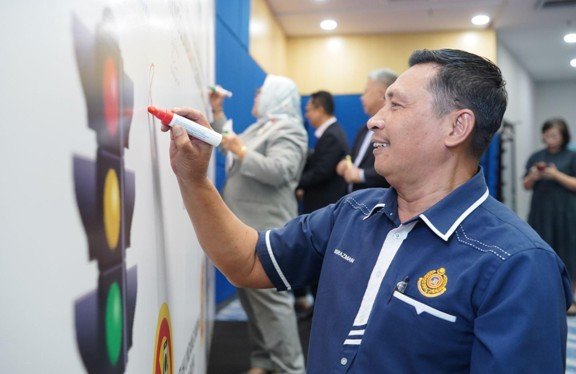 YBrs Tuan Norazman Nordin, Ketua Penolong Pegawai Penguatkuasa Kanan (Dasar) from Jabatan Pengangkutan Jalan Malaysia (JPJ) signing the “Pledge Wall” at VTAREC Road Safety Forum.
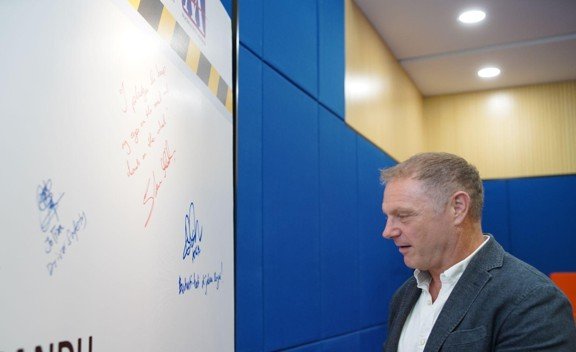 YBrs Mr Steve Miller, Chief Executive Officer of MRC Malaysia signing the “Pledge Wall” at VTAREC Road Safety Forum.
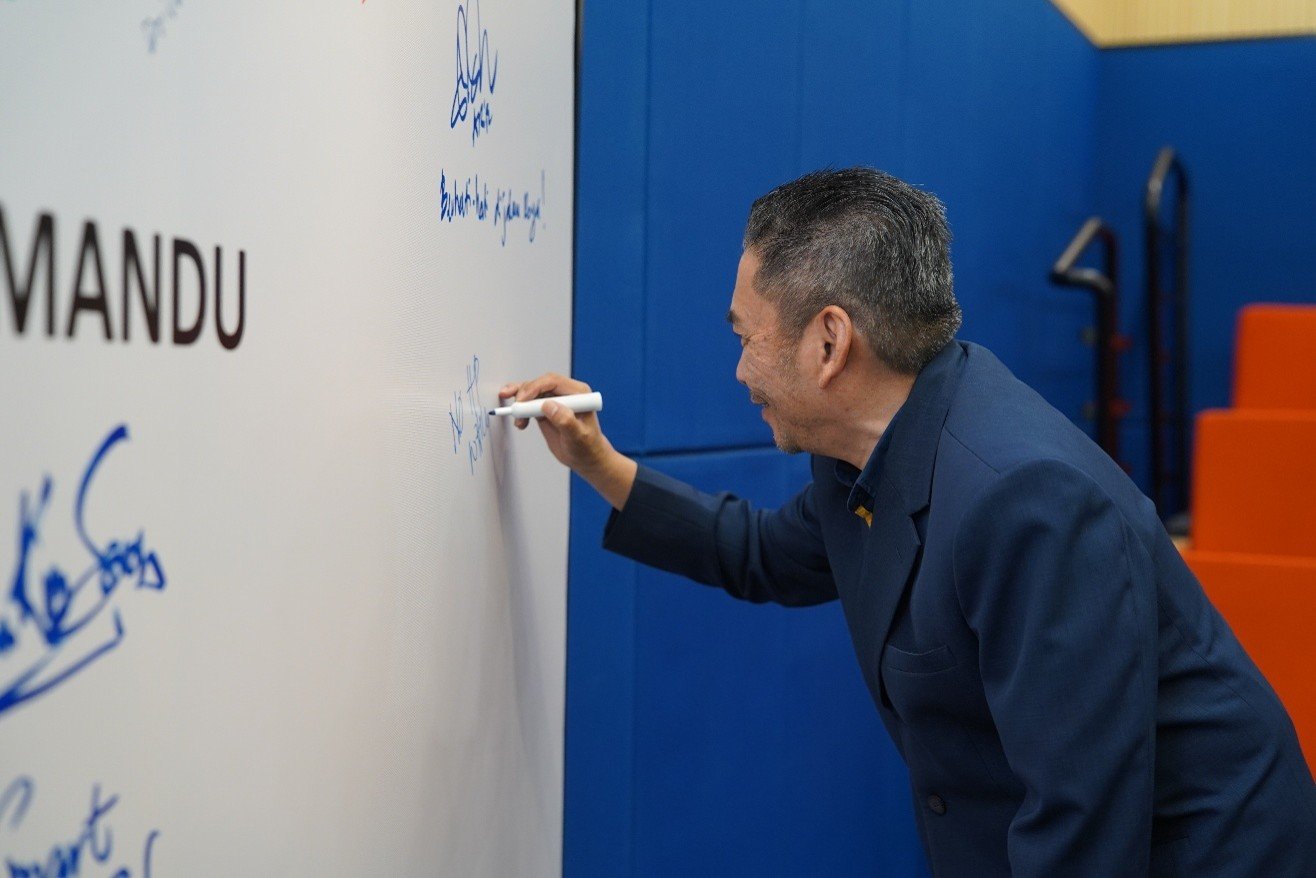 YBhg Assoc. Prof. Ts. Dr. Basharudin Bin Abdul Hadi signing the “Pledge Wall” at VTAREC Road Safety Forum.
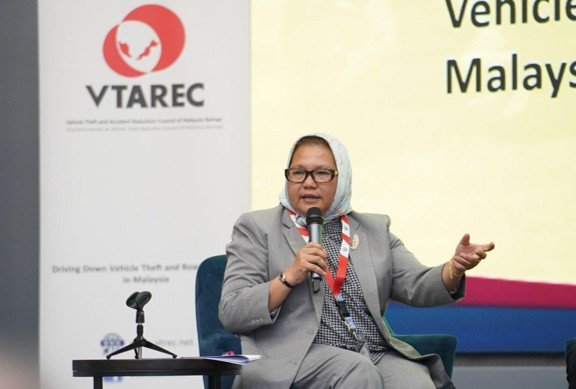 YBrs Puan Mas Tina Abdul Hamid, VTAREC Co-ordinator moderating the VTAREC Road Safety Forum session.
The forum session was moderated by YBrs Puan Mas Tina Abdul Hamid, Co-ordinator of VTAREC with a list of experienced experts to lead the discussion. She introduced the speakers and noted that while the issue is increasingly concerning, it remains largely ignored by the masses who operate under a false sense of security as people have not experienced it on a personal level.
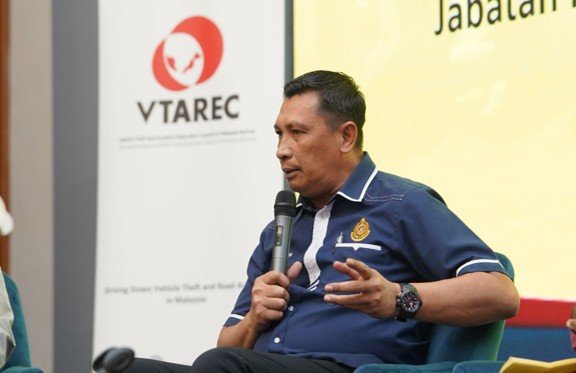 YBrs Tuan Norazman Nordin, Ketua Penolong Pegawai Penguatkuasa Kanan (Dasar) from Jabatan Pengangkutan Jalan Malaysia (JPJ) stressing on the implications of using handphones on the road.
The first speaker was YBrs Tuan Norazman Nordin, Ketua Penolong Pegawai Penguatkuasa Kanan (Dasar) from Jabatan Pengangkutan Jalan Malaysia (JPJ). He highlighted that the Malaysian authorities have implemented a strict RM300.00 mandatory fine for drivers caught using handphones while operating a vehicle. In addition to the financial penalty, offenders are subject to the KEJARA demerit point system. Once a driver accumulates a total of 20 points, their driving license will be automatically suspended. He added that if you observe another driver using their phone while on the road, you can report the incident directly through the official JPJ mobile app.
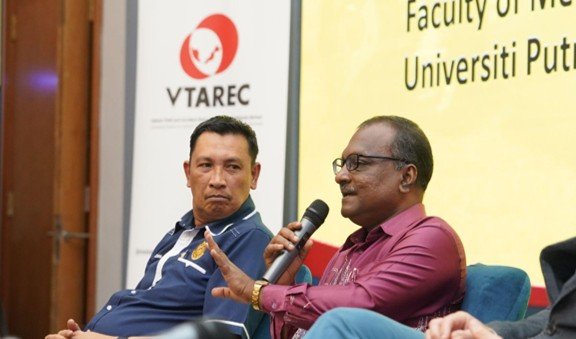 YBhg Prof Dr Kulanthayan KC Mani, Faculty of Medicine and Health Sciences from Universiti Putra Malaysia (UPM) highlighting the psychological and cognitive perspective on handphone usage.
The second speaker was YBhg Prof Dr Kulanthayan KC Mani, Faculty of Medicine and Health Sciences from Universiti Putra Malaysia (UPM). He stated the statistics of road traffic accidents with 649,806 accidents reported last year, averaging one accident every 48 seconds. These incidents resulted in 6,537 fatalities, meaning a life is lost on the road every 80 minutes. He highlighted that driving requires constant information processing, but using a handphone creates a cognitive disturbance that prevents a driver from being fully aware of their surroundings. This distraction significantly increases reaction time, and it takes longer to hit the brakes which creates a larger ‘danger zone’ where accidents are more likely to occur. He added that while holding a phone is the most dangerous as it leaves the driver with only one hand for steering, hands-free devices are also hazardous with the mental effort of a conversation causing a loss of focus on the road. To mitigate these risks, drivers are advised to minimize phone use entirely and reduce their driving speed to allow for more reaction time. Additionally, YBhg Prof Dr Kulanthayan KC Mani also highlighted the empirical of employer’s role in monitoring their employees’ road behaviour in respect to adhering to road safety rules as there are a number of companies have taken the steps to monitor their employees’ traffic summons received.
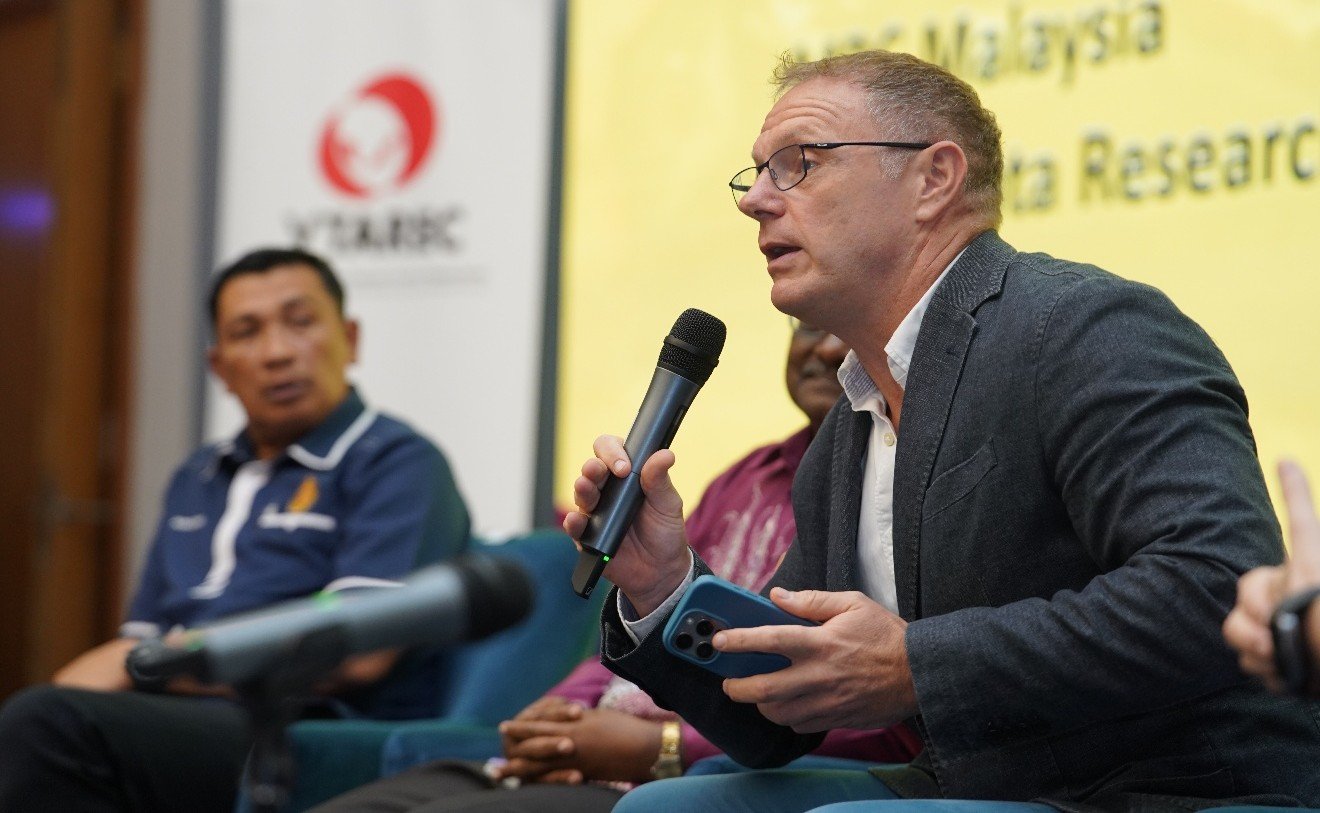 YBrs Mr Steve Miller, Chief Executive Officer of MRC Malaysia explaining the driving cultures in Malaysia.
The third speaker was YBrs Mr Steve Miller, Chief Executive Officer of MRC Malaysia, Motordata Research Consortium Sdn Bhd. He stated that vehicle distractions are inherently dangerous as they compromise a driver’s ability to maintain full control of the car. He noted that a significant disparity exists between the driving cultures of the United Kingdom (UK) and Malaysia. In the UK, using a handphone while driving is viewed as a socially shameful act, whereas it is still widely tolerated in Malaysia. He added that the UK also employs a Vehicle Risk Rating (VRR) system that influences insurance costs. Additionally, drivers who opt for safer vehicle specifications or demonstrate better driving habits can benefit from lower insurance premiums, effectively using financial incentives to promote road safety. He also mentioned that in the latest vehicle technology, manufacturers opt for touch friendly buttons for radio and navigator devices replacing the touch screen. Many car manufacturers are now incorporating manual dials and tactile controls to reduce cognitive distraction.
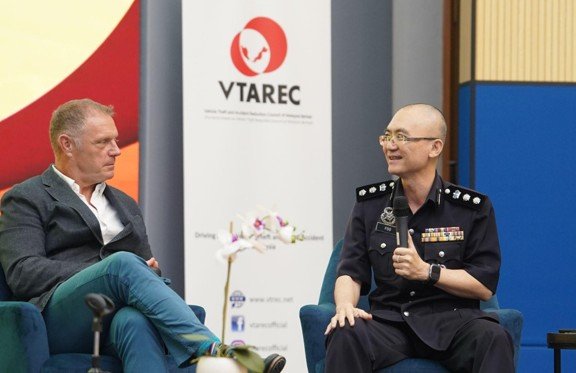 (On the right) YDH ACP Tuan Foo Chek Seng, Timbalan Ketua Jabatan Pencegahan Jenayah dan Keselamatan Komuniti (JPJKK) from Ibu Pejabat Kontinjen Kuala Lumpur shares his view and thoughts on driving habits.
The final speaker was YDH ACP Tuan Foo Chek Seng, Timbalan Ketua Jabatan Pencegahan Jenayah dan Keselamatan Komuniti (JPJKK) from Ibu Pejabat Kontinjen Kuala Lumpur. He stated that a nation’s driving culture is built on a foundation of individual mindset. If citizens fail to respect minor regulations, they are unlikely to adhere to life-saving laws. He mentioned that by eliminating small risks, we can effectively prevent major accidents. He highlighted that this change must begin with early education and a reduction in our general dependency on mobile devices. Crucially, parents must lead by example. Using a phone or speeding while children are in the car inadvertently grooms the next generation of dangerous drivers. Ultimately, road safety is a personal responsibility. He strongly suggests that it starts with us.
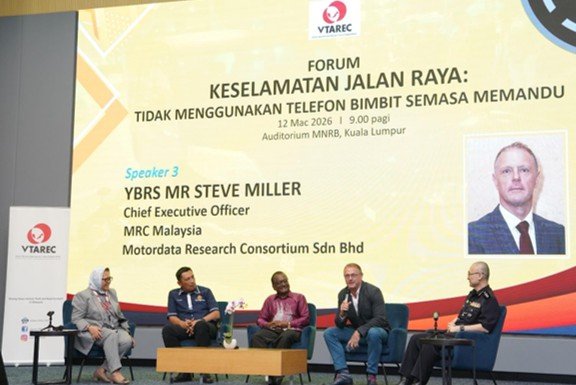 Forum in session with the moderator and the panellists.
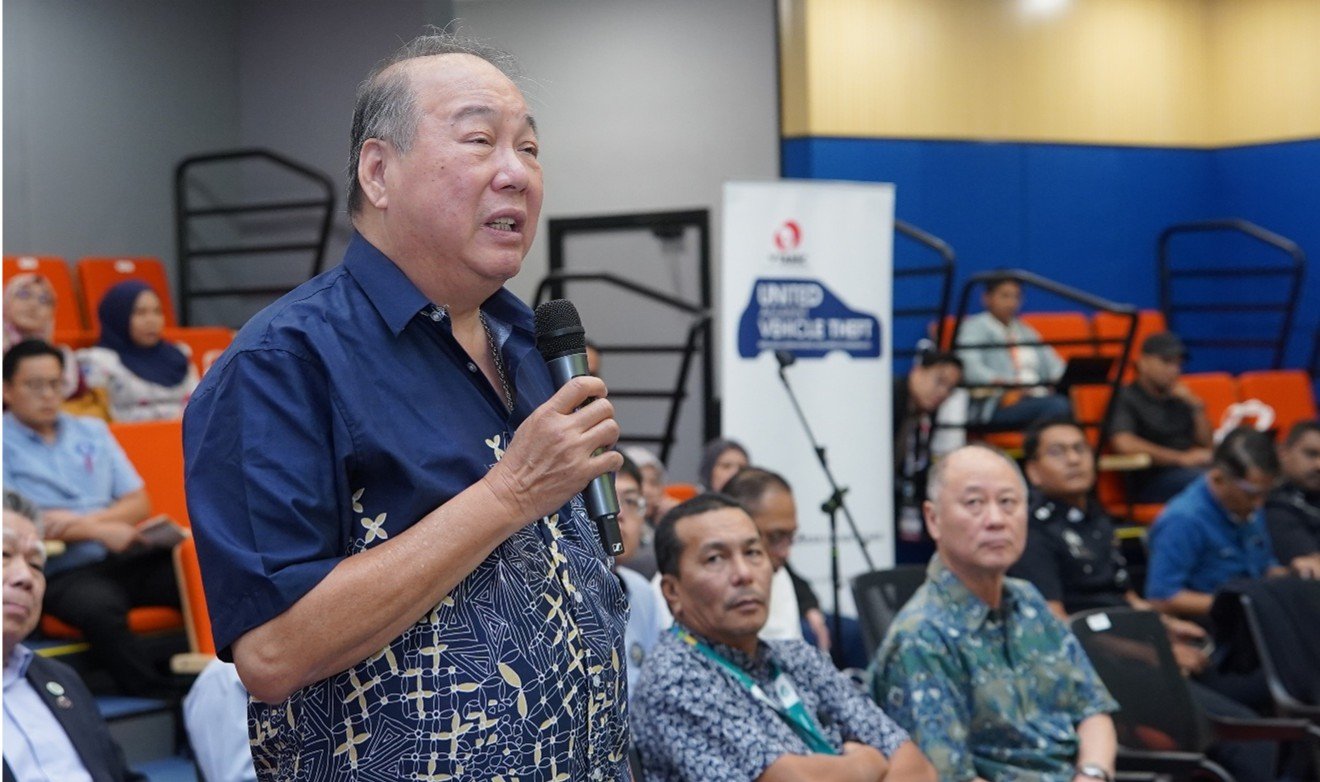 YBhg Dato Alex Lye, President of International Association of Auto Theft Investigators (IAATI), asking questions during the Q&A session.
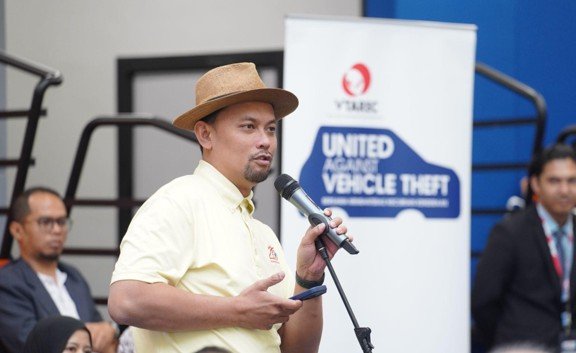 Mohamad Azwan, Secretary for Association of Malaysian Hauliers (AMH) asking questions during the Q&A session.
The forum continued with Q&A sessions from the panellist and audience. Some questions from the floor were “From the perspective of law enforcement, is it actually legal for a driver to rely on autopilot? For example, for the driver to be using the handphones while on auto pilot, would that be considered as an offence?” and another question was “From the academic perspective, does the presence of an auto pilot change the expectation of having full focus while driving?”
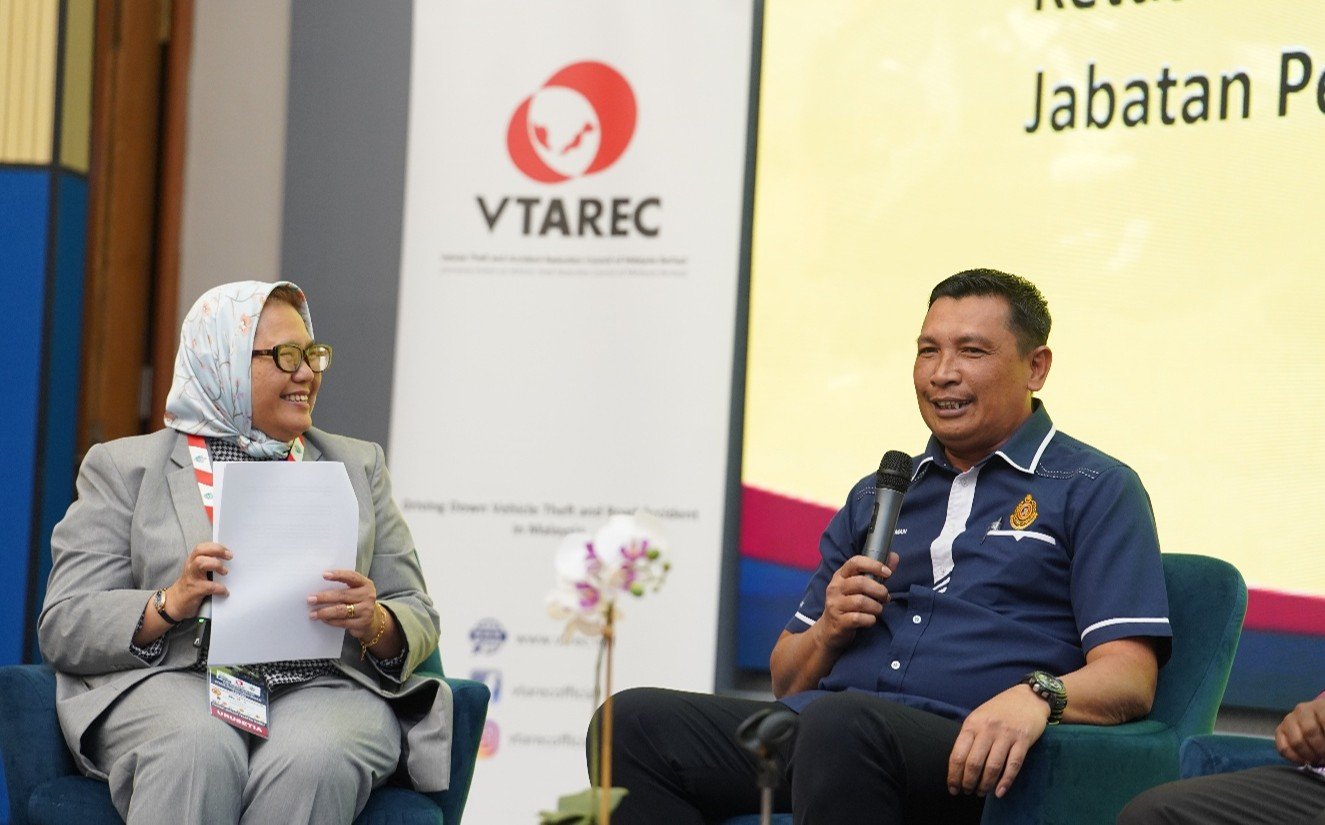 (On the right) YBrs Tuan Norazman Nordin, Ketua Penolong Pegawai Penguatkuasa Kanan (Dasar) from Jabatan Pengangkutan Jalan Malaysia (JPJ) answering questions during the Q&A session.
From the perspective of law enforcement, YBrs Tuan Norazman Nordin answered by stating that currently, autonomous driving technology remains in the pilot project stage, and there are no comprehensive local studies or specific legal frameworks governing its use. Under the Road Transport Act 1987 (Akta Pengangkutan Jalan 1987), the law is clear that full responsibility and liability for any accident rest solely with the driver and the vehicle owner. Even with self-driving features engaged, the human operator is legally accountable for the vehicle’s actions.
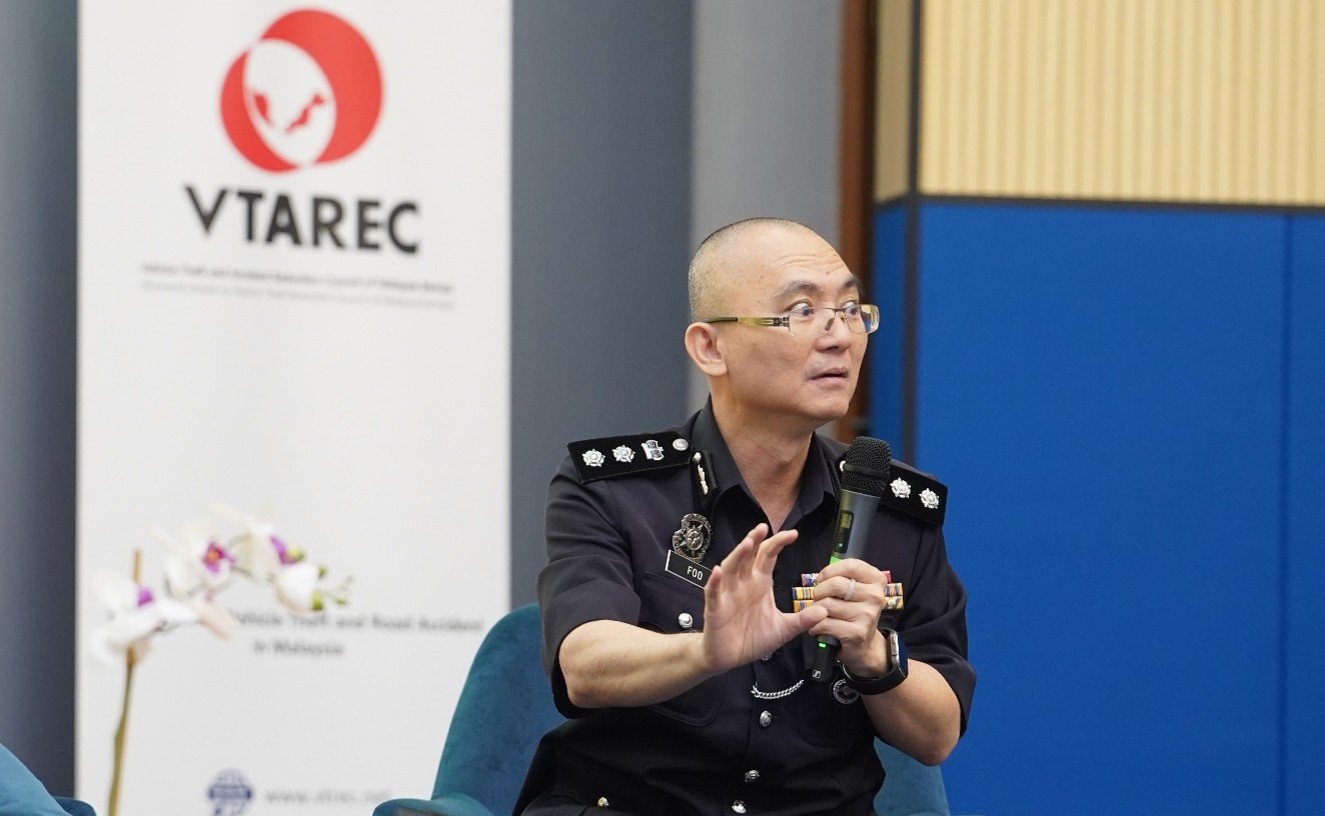 YDH ACP Tuan Foo Chek Seng, Timbalan Ketua Jabatan Pencegahan Jenayah dan Keselamatan Komuniti (JPJKK) from Ibu Pejabat Kontinjen Kuala Lumpur answering questions during the Q&A session.
YDH ACP Tuan Foo Chek Seng added that road safety is a shared responsibility. By staying vigilant and maintaining high situational awareness, a driver gains the ability to anticipate and prevent a collision before it occurs, potentially saving lives despite the negligence of other road users.
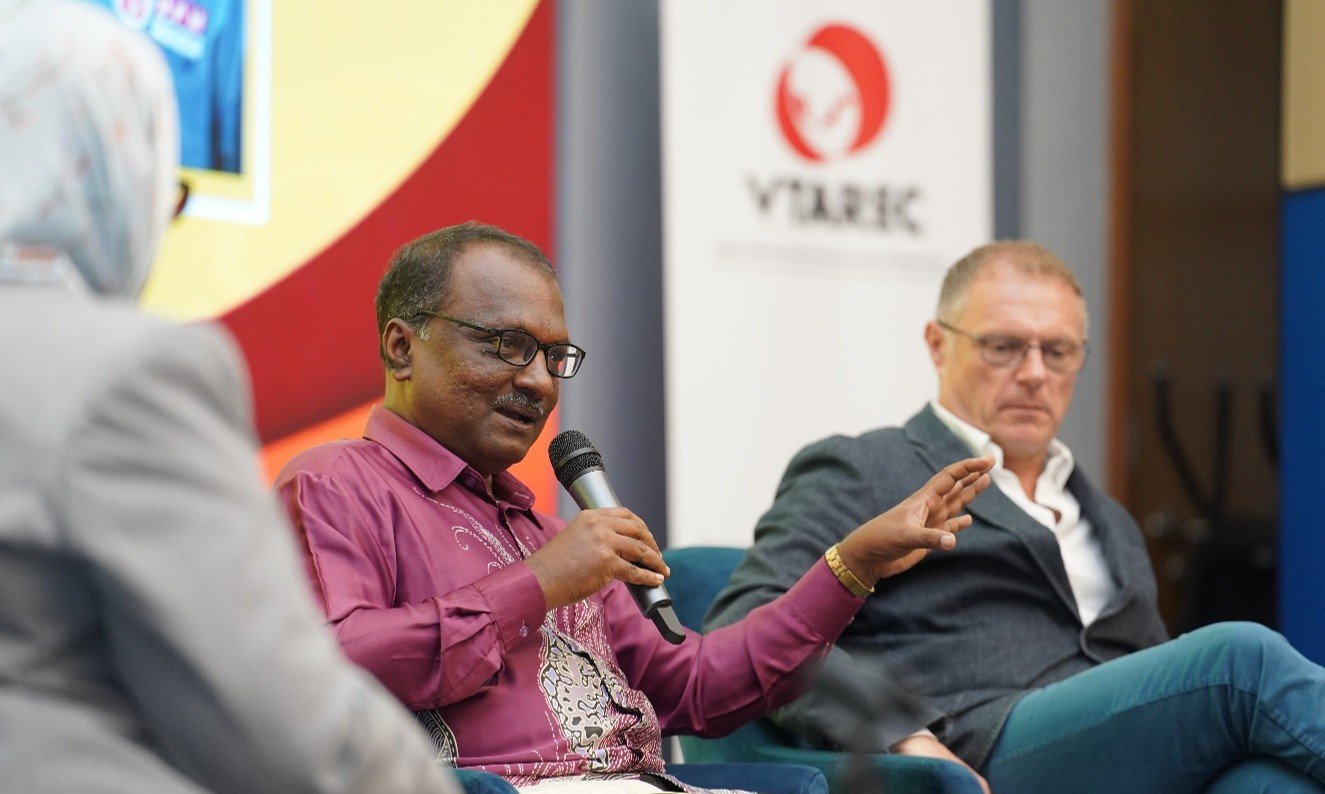 (On the left) YBhg Prof Dr Kulanthayan KC Mani, Faculty of Medicine and Health Sciences from Universiti Putra Malaysia (UPM) answering questions during the Q&A session.
From the academic perspective, YBhg Prof Dr Kulanthayan KC Mani answered by stating that autonomous driving technology currently lacks decision-making and sensory adaptability of a human driver. A primary challenge in Malaysia is the high density of motorcycles, which often move unpredictably through traffic. Autonomous sensors and autopilot systems frequently struggle to detect or respond to smaller, more agile vehicles that do not follow the standard lane patterns of larger cars. Until technology can reliably navigate these chaotic and specific local traffic dynamics, human intervention remains the safer and more reliable option.
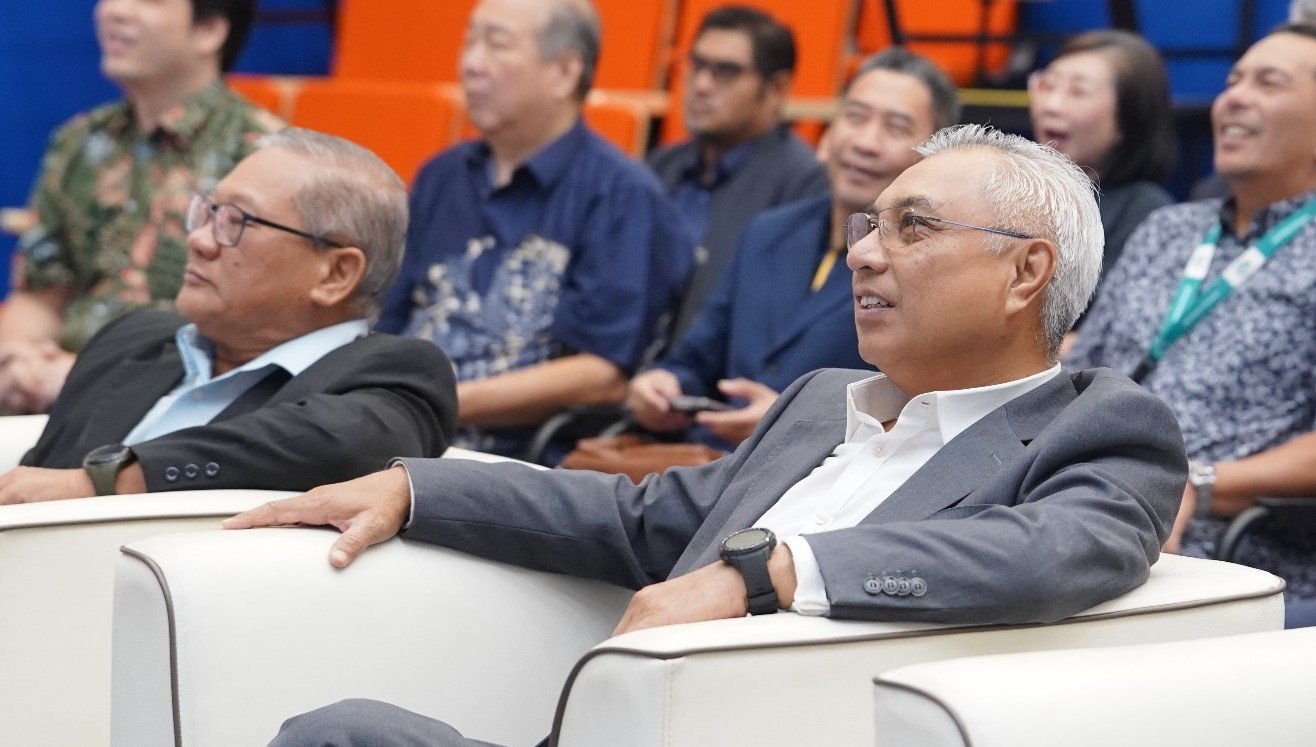 From left: YBhg Dato’ Ooi Win Juat, VTAREC Director and YBhg Datuk Lokman Jamaan, VTAREC Chairman listening to VTAREC Road Safety Forum.
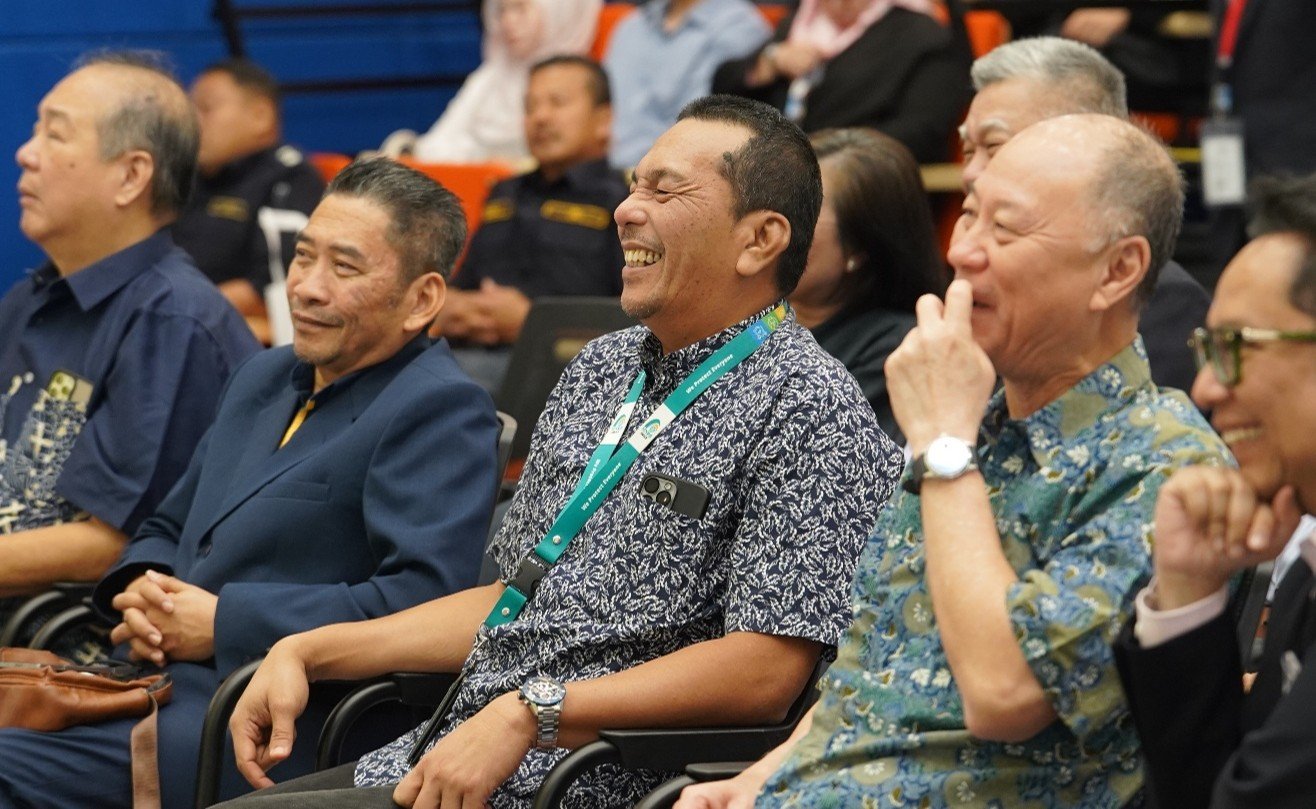 From left: YBhg Dato Alex Lye, President of IAATI, YBhg Assoc. Prof. Ts. Dr. Basharudin Bin Abdul Hadi, YBrs Encik Saiful Nizam Jahaludin from Takaful Ikhlas General Berhad, YBrs Mr Chua Kim Soon, Chief Executive Officer of PIAM and YBrs Ahmad Noor Azhari Abdul Manaf, Chief Executive Officer of Malaysia Re listening to VTAREC Road Safety Forum.
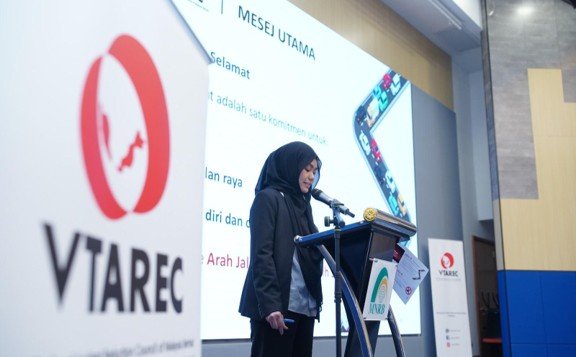 Puan Nor Idzatul Iqma Mohd Salleh, VTAREC Executive presenting VTAREC Challenge to the participants to convey the messages of the initiative.
Puan Nor Idzatul Iqma Mohd Salleh took to the stage to present the VTAREC Challenge, an initiative designed to gamify and reward safe driving habits. The session concluded with participants receiving the VTAREC Challenge Mini Backdrop. Plaques were given to the panellists as a token of appreciation.
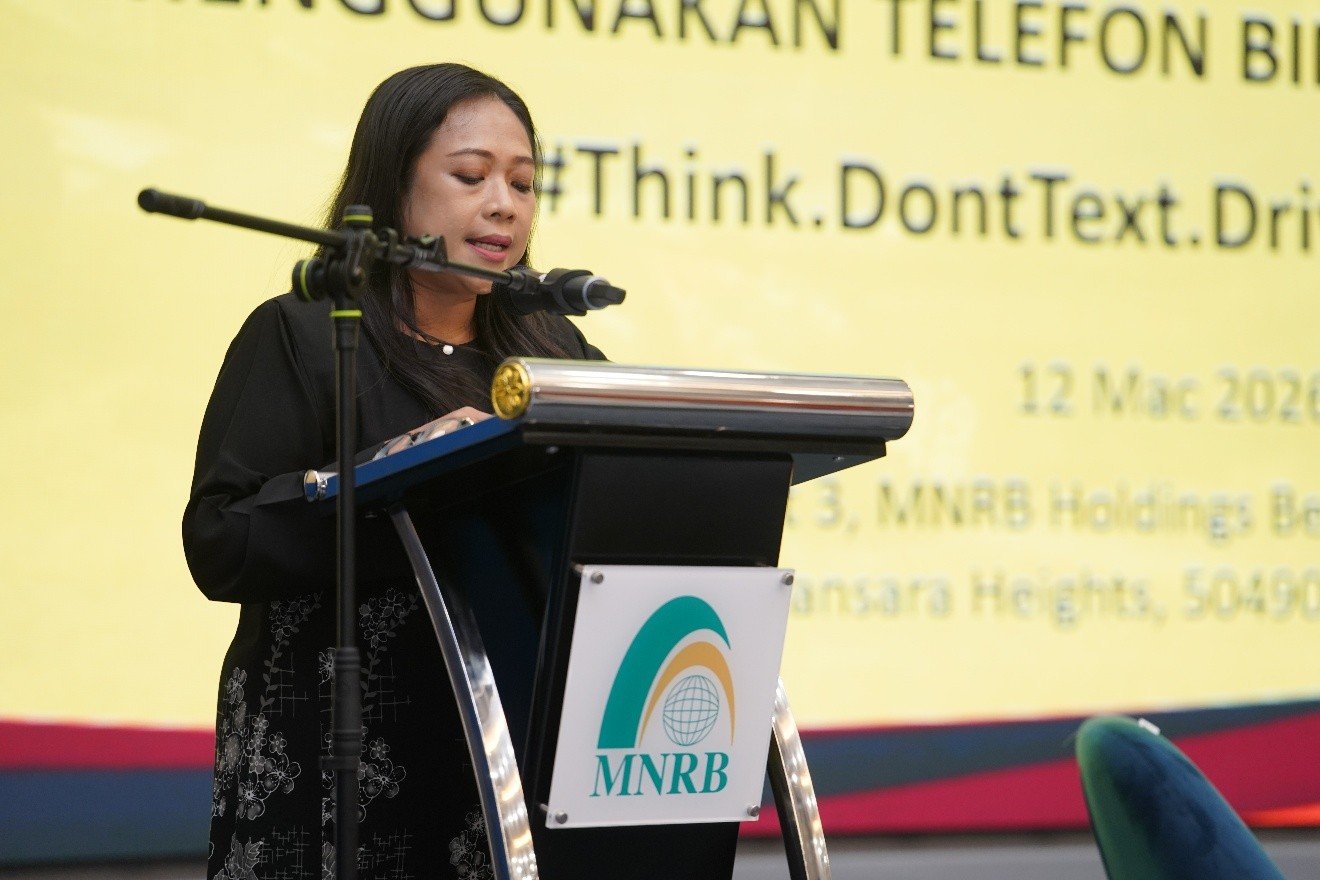 Puan Siti Hawiza Shamsuddin as the Master of Ceremonies at the VTAREC Road Safety Forum.
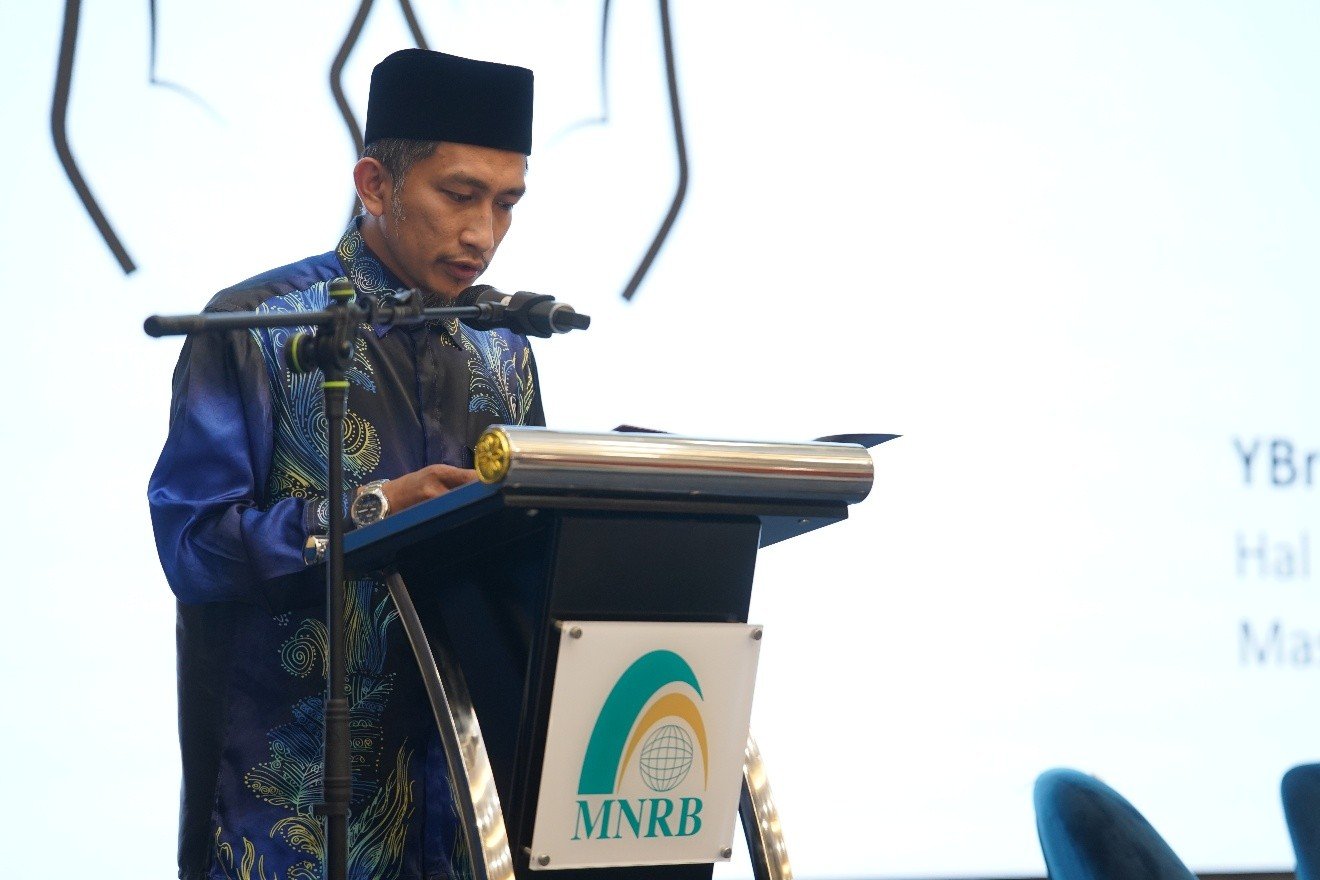 YBrs Al-Fadhil Ustaz Mohd Azali Omar, Penolong Pegawai Hal Ehwal Islam Imam Masjid Negara leading the prayer recital at the VTAREC Road Safety Forum.
The forum was guided by Puan Siti Hawiza Shamsuddin as the Master of Ceremonies and a prayer recital led by YBrs Al-Fadhil Ustaz Mohd Azali Omar, Penolong Pegawai Hal Ehwal Islam Imam Masjid Negara.
The forum ended successfully and the crowd dispersed.
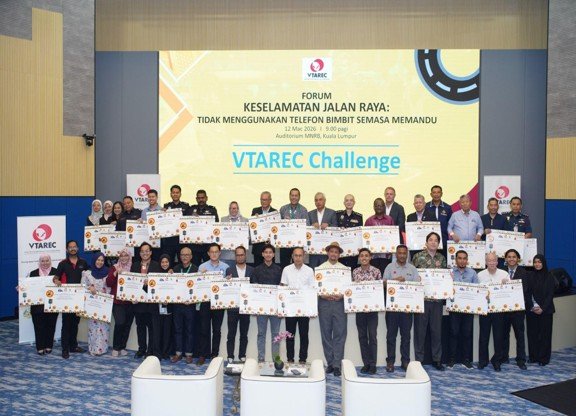 Participants of the VTAREC Challenge holding the VTAREC Challenge Mini Backdrop.
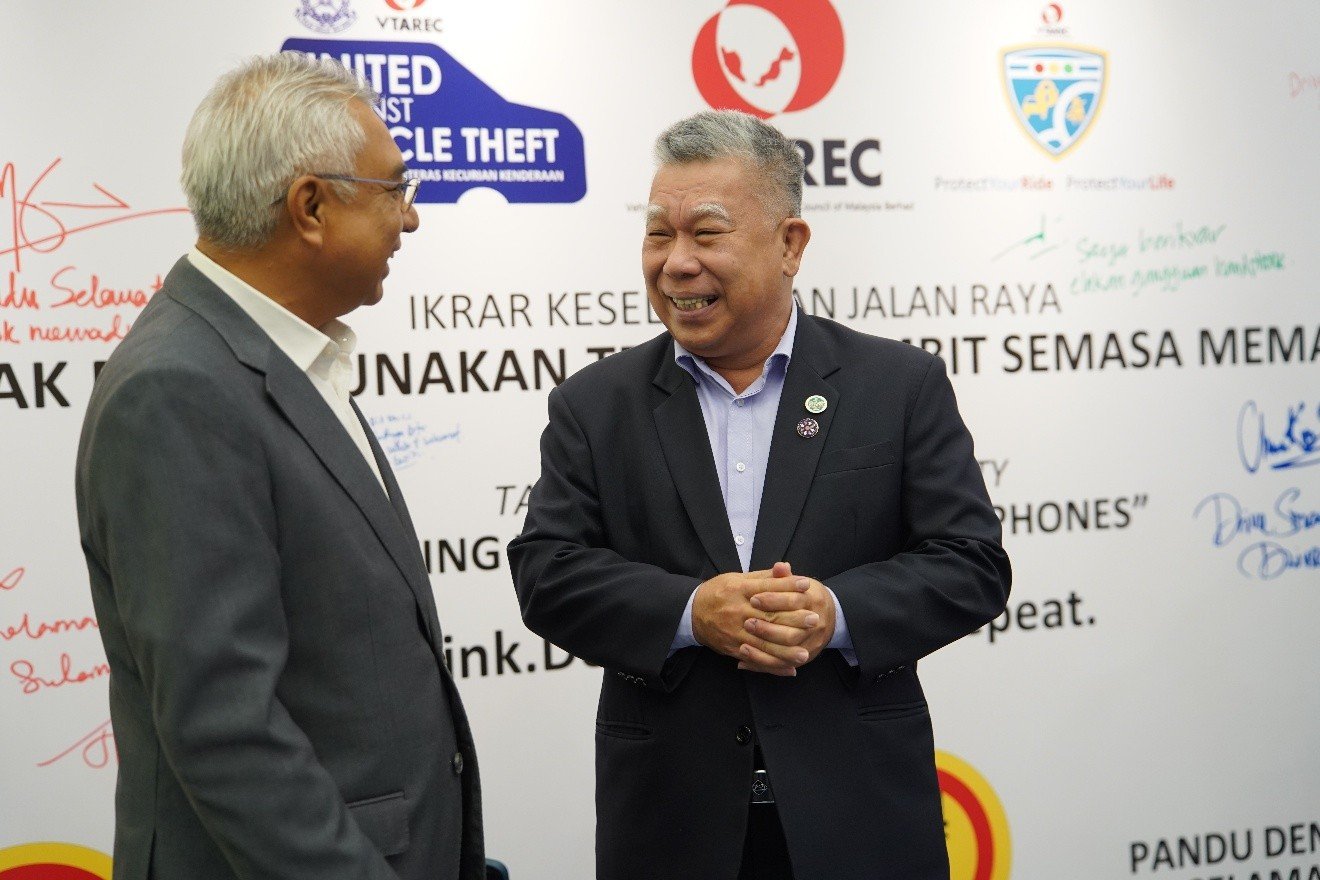 YBhg Datuk Lokman Jamaan, VTAREC Chairman with Mr Chia Jee Onn, President of Johor Transport & Logistics Operators’ Association (JoTran) at the VTAREC Road Safety Forum.
 From left: Puan Ng Bee Leng, Executive Secretary of JoTran, YBrs Puan Mas Tina Abdul Hamid, VTAREC Co-ordinator, Encik Mohd Hisham Mohd Hafidz, Transport Safety Officer of Mekar Angkut Sdn Bhd, YBrs Mr Steve Miller, Chief Executive Officer of MRC Malaysia, Mr Chia Jee Onn, President of JoTran and YBhg Dato’ Ooi Win Juat, VTAREC Director at the VTAREC Road Safety Forum.
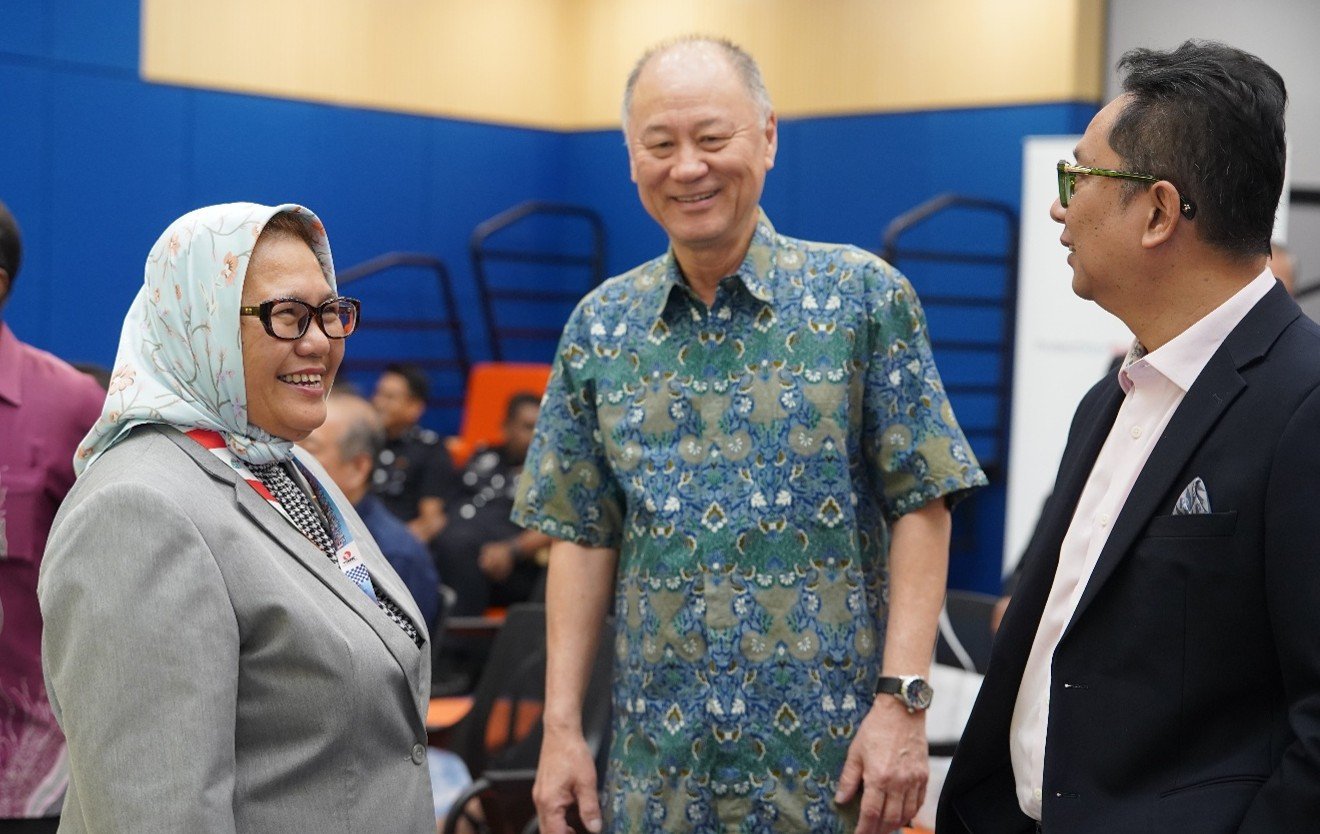 From left: YBrs Puan Mas Tina Abdul Hamid, VTAREC Co-ordinator, YBrs Mr Chua Kim Soon, Chief Executive Officer of PIAM and YBrs Encik Ahmad Noor Azhari Abdul Manaf, Chief Executive Officer of Malaysia Re at the VTAREC Road Safety Forum.