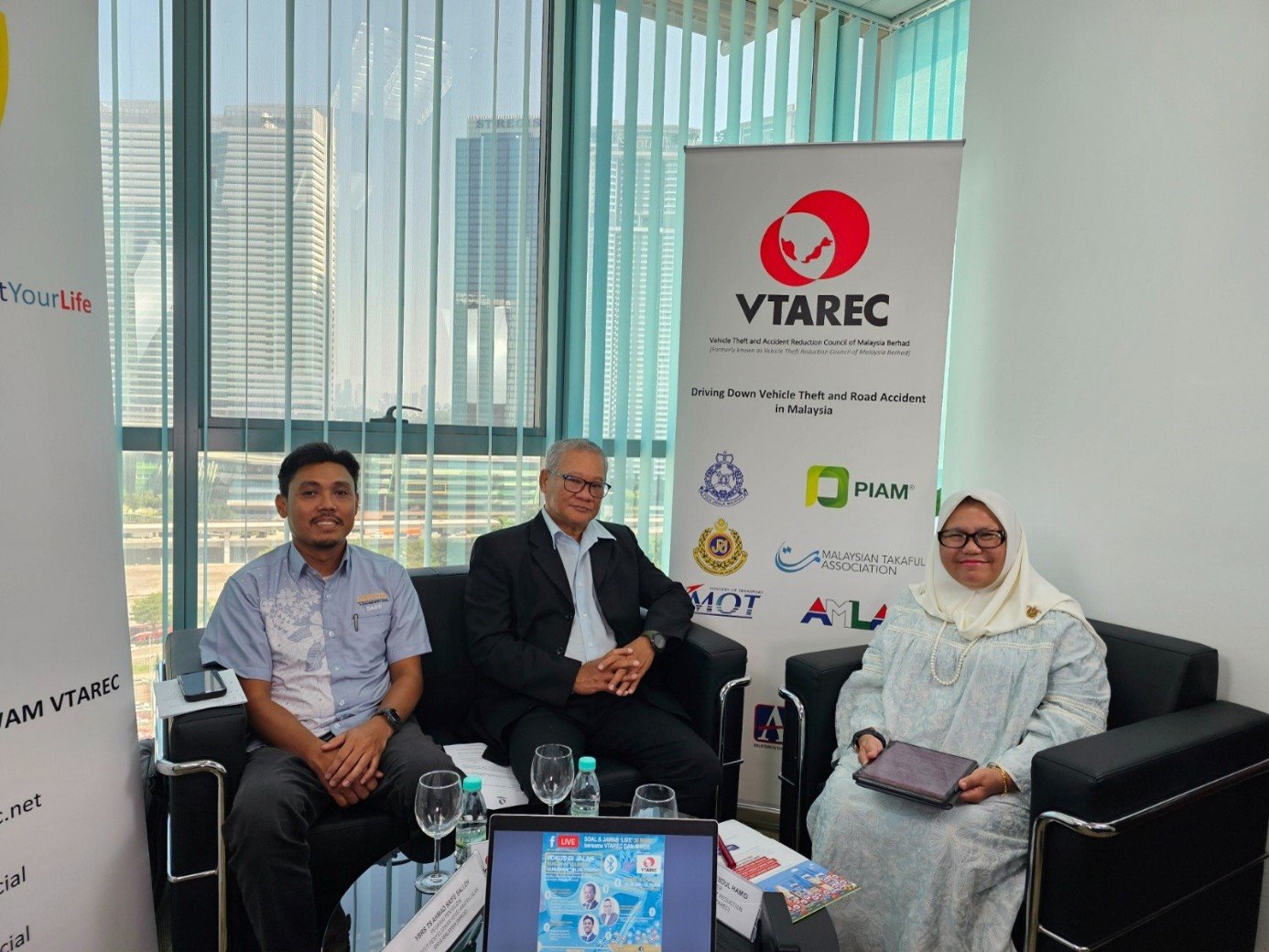
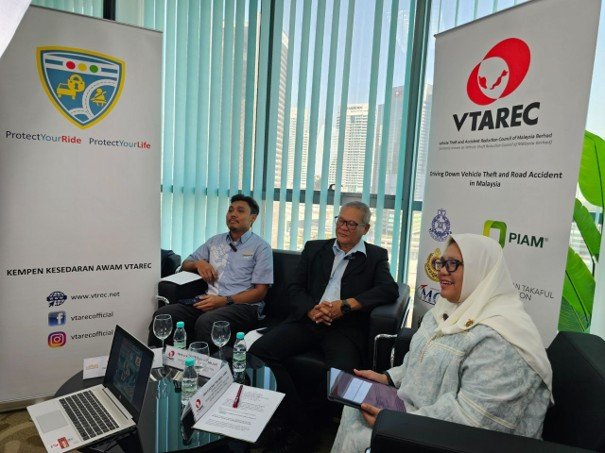
From left: YBrs Tuan Ts. Ahmad Saife Salleh, Research Officer at the Malaysian Institute of Road Safety Research (MIROS), YBhg Dato’ Ooi Win Juat, Director of VTAREC and YBrs Puan Mas Tina Abdul Hamid, General Manager of VTAREC during the 30-Minute FB Live session in Kuala Lumpur.
KUALA LUMPUR, 16 April 2026: The Vehicle Theft and Accident Reduction Council of Malaysia (VTAREC) organised a Facebook (FB) Live session titled “Fokus di Jalan, Bukan di Telefon, Gunakan Bluetooth” to raise public awareness on the dangers of using mobile phones while driving and to encourage motorists to utilise available technologies responsibly while maintaining full attention on the road.
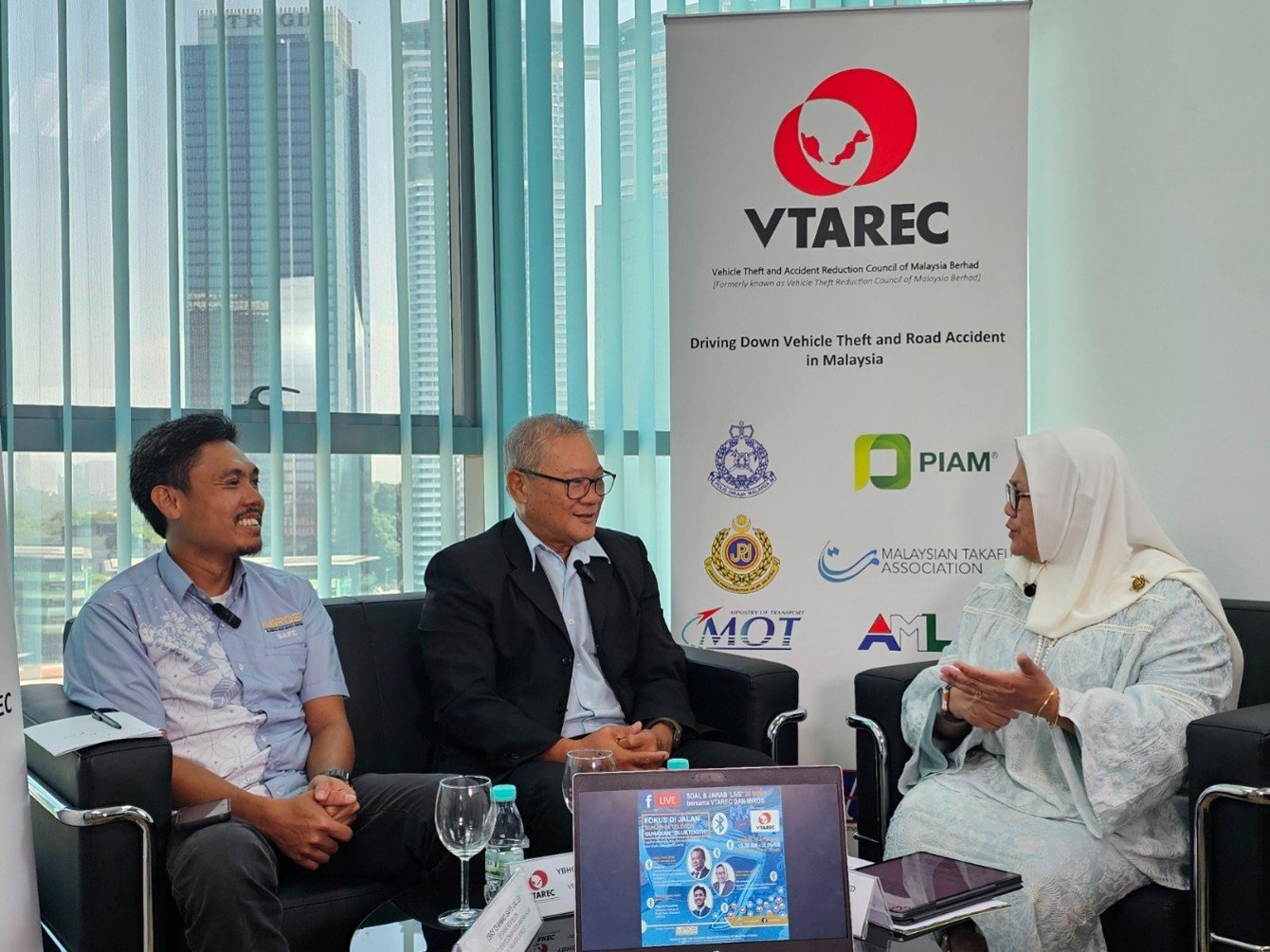 VTAREC’s General Manager, YBrs Puan Mas Tina Abdul Hamid, moderating the FB Live session with featured panellists, YBhg Dato’ Ooi Win Juat, Director of VTAREC and YBrs Tuan Ts. Ahmad Saife Salleh, Research Officer at MIROS.
The session was moderated by YBrs Puan Mas Tina Abdul Hamid, General Manager of VTAREC, and featured two panellists, YBhg Dato’ Ooi Win Juat, Director of VTAREC and YBrs Tuan Ts. Ahmad Saife Salleh, Research Officer at the Malaysian Institute of Road Safety Research (MIROS). The discussion centred on educating road users about the role of Bluetooth technology in supporting safer driving practices while emphasising that drivers must remain fully focused on the road at all times. In addition to sharing their professional insights, the panellists also addressed questions submitted by members of the public during the live session.
During the opening of the session, YBrs Puan Mas Tina Abdul Hamid explained the concept of Bluetooth technology and its common applications in daily life. She highlighted that Bluetooth is a wireless communication technology that allows devices to connect and exchange information without the use of physical cables, making it easier for users to perform tasks more conveniently. She noted that the discussion aimed to explore how Bluetooth technology in vehicles can support road safety by reducing the need for drivers to physically handle their mobile phones while driving.
YBhg Dato’ Ooi Win Juat emphasised that the topic is critical, as many road accidents continue to occur due to mobile phone usage while driving. He explained that cognitive distraction remains a major risk factor for drivers, as operating a vehicle requires constant alertness and the ability to respond quickly to unexpected situations. He provided examples of common road scenarios, such as vehicles suddenly exiting lanes or pedestrians crossing the road, which require immediate reflex actions to avoid collisions. He warned that using a mobile phone while driving can delay reaction time, increasing the likelihood of accidents. He further noted that the risks are even greater for motorcyclists, as motorcycles rely on balance and braking mechanisms that are more vulnerable compared to four-wheeled vehicles.
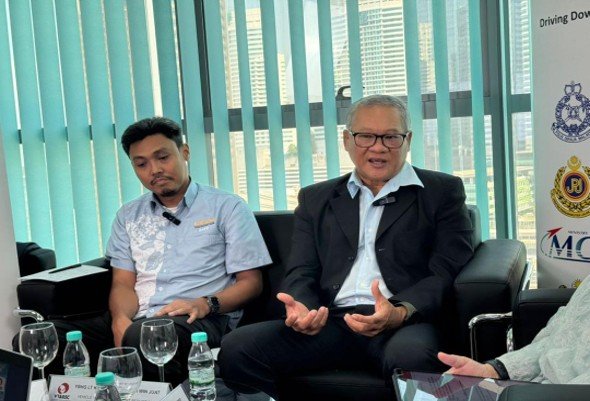 YBhg Dato’ Ooi Jin Wuat explaining how crucial it is to give full focus while driving on the road.
From a technical perspective, YBrs Tuan Ts. Ahmad Saife Salleh explained that Bluetooth is a wireless technology that connects devices using radio frequency signals, allowing mobile phones to link directly to a vehicle’s infotainment system. He highlighted that most modern vehicles, including entry-level models are now equipped with Bluetooth functionality as a standard feature. He also noted that Bluetooth technology is energy-efficient, user-friendly and capable of automatically connecting devices with minimal signal interference. However, he emphasised that certain applications, such as messaging services still require drivers to physically interact with their phones, which remains unsafe while driving. Therefore, Bluetooth should primarily be used only for essential communication purposes.
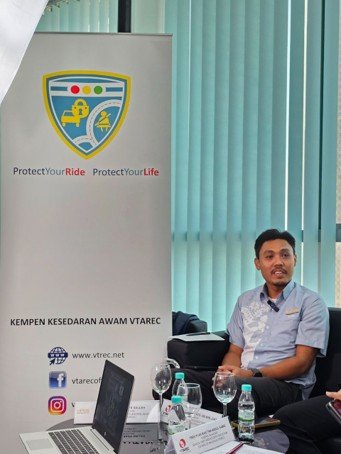 YBrs Tuan Ts. Ahmad Saife elaborated on the function of Bluetooth and how the technology can assist drivers in enhancing road safety.
Despite the availability of Bluetooth technology, YBhg Dato’ Ooi Win Juat stressed that the safest practice is still to avoid using mobile phones altogether while driving. He explained that even when using hands-free devices or Bluetooth systems, drivers may still experience cognitive distraction that diverts attention from the road. He highlighted that driving through challenging road conditions, such as sharp bends or high-risk areas, requires full concentration, precise timing and careful control of vehicle movements, particularly when applying brakes or accelerating.
YBrs Puan Mas Tina Abdul Hamid added that several countries have implemented stricter regulations that prohibit drivers from handling or responding to phone calls while driving, even when using hands-free devices. She expressed agreement with the panellists that although Bluetooth and hands-free technologies may reduce certain physical risks, they can still affect driver concentration and contribute to cognitive distraction.
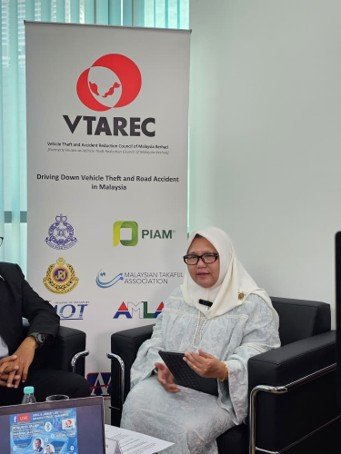 YBrs Puan Mas Tina Abdul Hamid, General Manager of VTAREC, leading the discussion as moderator during the 30-minute FB Live session.
Sharing a real-life example, YBhg Dato’ Ooi Win Juat recounted a case in which a driver dropped a mobile phone while driving and attempted to retrieve it from the floor of the vehicle. The driver’s attention shifted away from the road, resulting in a fatal accident. He emphasised that even a brief distraction lasting one to two seconds is sufficient to cause a serious or fatal collision and such incidents can be prevented if drivers choose to ignore their phones while driving.
Supporting this point, YBrs Tuan Ts. Ahmad Saife Salleh explained that when a mobile phone is properly connected to a vehicle through Bluetooth, there is no need for drivers to handle their phones during a call. He also noted that advancements in technology have extended beyond cars to motorcycles, where helmets equipped with Bluetooth intercom systems are now widely available in the market. These systems can be particularly helpful for delivery riders and other road users who rely on communication during their work. He further highlighted that voice command features allow drivers and riders to make calls without physically touching their devices. He encouraged road users to invest in safety technologies rather than making modifications that do not contribute to road safety.
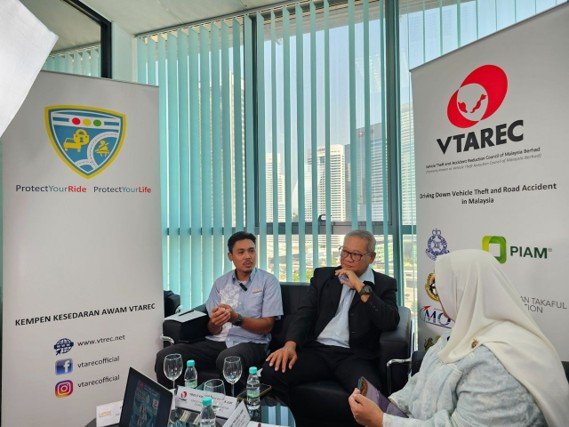 YBhg Dato’ Ooi Win Juat and YBrs Tuan Ts. Ahmad Saife Salleh exchanging views during the 30-minute FB Live session while responding to question posed by YBrs Puan Mas Tina as the moderator.
YBhg Dato’ Ooi Win Juat issued a strong reminder to all road users, urging them not to allow a single phone call to become the cause of losing a life. He stressed that drivers must give their full attention to the road at all times in order to protect themselves and other road users.
YBrs Tuan Ts. Ahmad Saife Salleh also emphasised that human behaviour remains a major contributing factor to road accidents, noting that a significant proportion of accidents are caused by driver behaviour and distraction. He explained that Malaysia has strict traffic laws related to mobile phone usage while driving, where offenders may face fines, imprisonment, or increased penalties for repeated offences. He warned that such consequences can lead to significant hardship, particularly if accidents involve injury or loss of life.
Several questions were also raised by members of the public during the Facebook Live session. One viewer asked whether Bluetooth technology truly helps improve driving safety or whether it still distracts drivers. In response, YBhg Dato’ Ooi Win Juat explained that Bluetooth can serve as a useful communication tool in urgent situations, but it is not a solution that can completely eliminate accidents. He advised drivers to avoid using their phones whenever possible and to concentrate fully on driving.
Another viewer asked about the difference between Bluetooth and traditional hands-free devices, as well as the challenges associated with using Bluetooth technology. YBrs Tuan Ts. Ahmad Saife Salleh explained that traditional hands-free devices typically rely on wired connections, while Bluetooth technology uses wireless connectivity that provides greater convenience and mobility. However, he noted that a common challenge with Bluetooth usage is the tendency for drivers to feel compelled to answer incoming calls immediately, even when it is not necessary. He advised drivers to assess the situation carefully and prioritise safety when deciding whether to respond to calls, particularly for riders who rely on communication as part of their work.
In response to a question about the role of VTAREC in increasing public awareness on the safe use of Bluetooth technology while driving, YBrs Puan Mas Tina Abdul Hamid explained that VTAREC will continue to collaborate with agencies such as MIROS, the Road Transport Department of Malaysia (JPJ) and the Royal Malaysia Police (PDRM) to promote road safety awareness. She noted that VTAREC actively provides recommendations to relevant authorities regarding the use of safety technologies and continues to advocate for public education initiatives to ensure that road users are informed about available tools that can help reduce accident risks.
YBrs Puan Mas Tina Abdul Hamid, YBhg Dato’ Ooi Win Juat and YBrs Tuan Ts. Ahmad Saife Salleh reading and discussing questions from the Facebook audience.
When asked why many drivers continue to use their phones while driving despite knowing the risks, YBhg Dato’ Ooi Win Juat acknowledged that mobile phone dependency has become a significant behavioural challenge in modern society. He explained that many individuals find it difficult to separate themselves from their devices, even in high-risk situations such as driving. He reminded road users not to allow mobile phone usage to become a contributing factor to road fatalities.
The final question addressed whether there should be a time limit for talking on the phone while using Bluetooth during driving. YBrs Tuan Ts. Ahmad Saife Salleh explained that there is currently no specific time limit, as the appropriateness of communication depends on the situation and driving conditions. He noted that some drivers may make calls to stay alert during long journeys, particularly when experiencing fatigue. However, he emphasised that any conversation should not interfere with driving concentration, and unnecessary communication should be avoided whenever possible.
The session ended with YBrs Puan Mas Tina Abdul Hamid expressing her appreciation to YBhg Dato’ Ooi Win Juat and YBrs Tuan Ts. Ahmad Saife Salleh for taking the time to participate in the discussion and share their valuable insights in increasing public awareness on this important issue. She also expressed hope that continued education and responsible driving behaviour would contribute to a reduction in road accidents through these collective efforts.
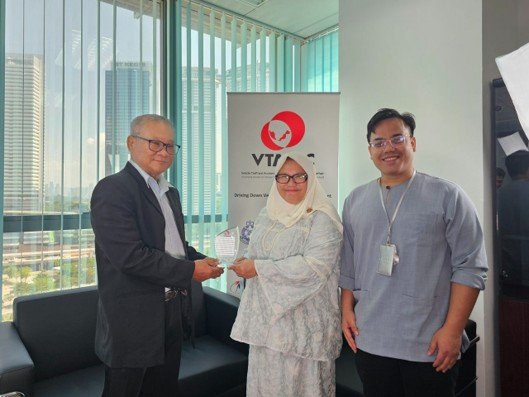
 YBrs Puan Mas Tina Abdul Hamid, accompanied by Encik Muhamad Faiz Mohd Faizal, presenting the appreciation plaque to YBhg Dato’ Ooi Win Juat, Director of VTAREC.
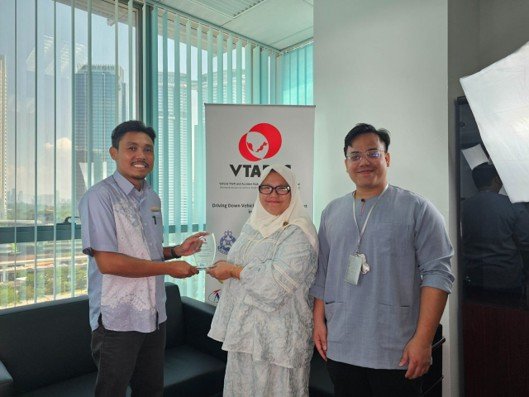
 YBrs Puan Mas Tina Abdul Hamid, accompanied by Encik Muhamad Faiz Mohd Faizal, presenting the appreciation plaque to YBrs Tuan Ts. Saife Salleh, Research Officer at MIROS.
 From left (back): Encik Muhamad Faiz Mohd Faizal, VTAREC Executive, Encik Muhammad Amirun Mohd Shamshuri, VTAREC Executive, Puan Aisha Fahmy, VTAREC Executive, Puan Adilah Mohd Akhir, VTAREC Executive, Puan Nor Idzatul Iqma Mohd Salleh, VTAREC Executive.
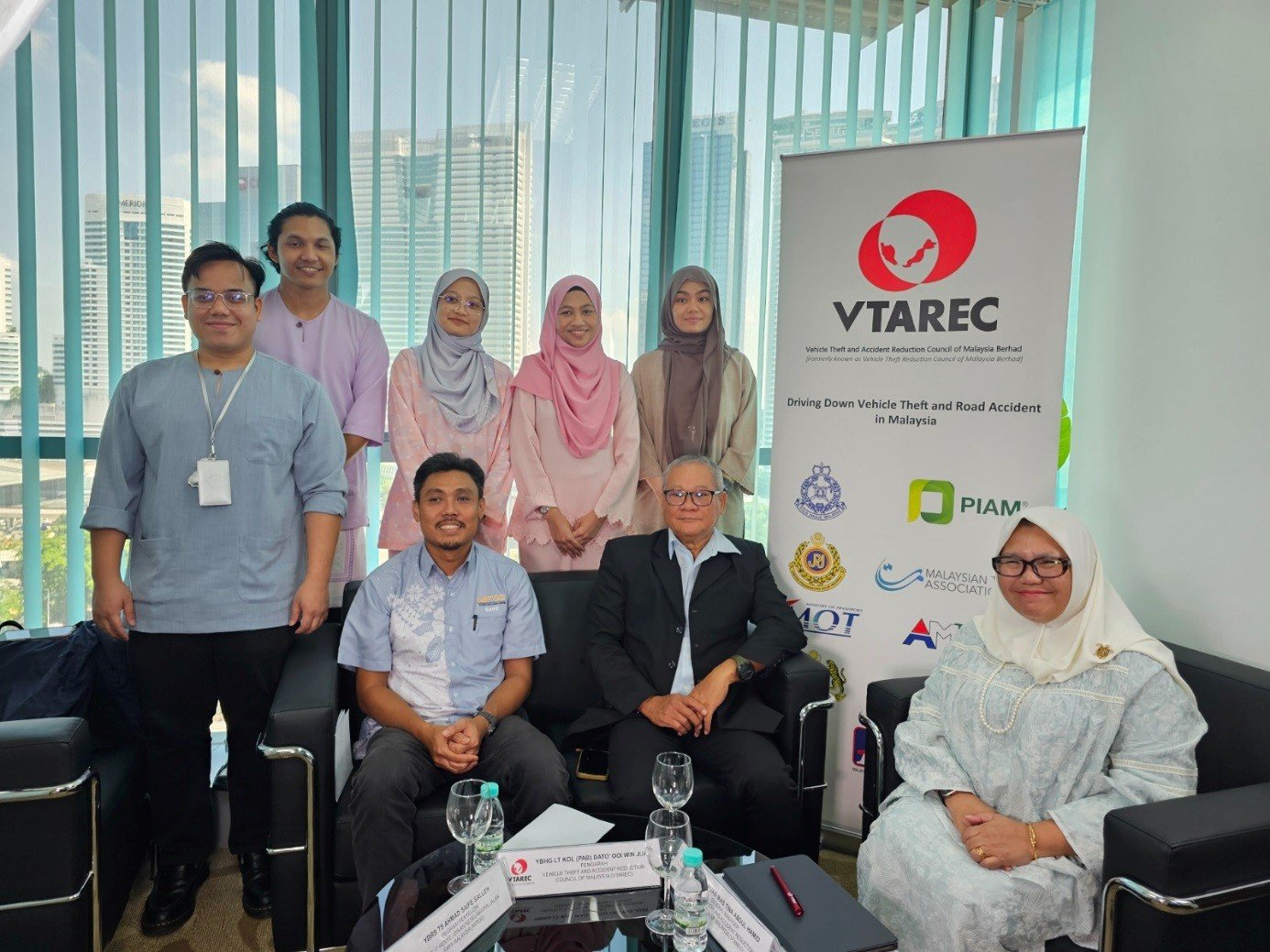 From left (front): YBrs Encik Ts Ahmad Saife Salleh, Research Officer of MIROS, YBhg Dato’ Ooi Win Juat, VTAREC Director, YBrs Puan Mas Tina Abdul Hamid, VTAREC General Manager in a group photo after the FB Live session.